
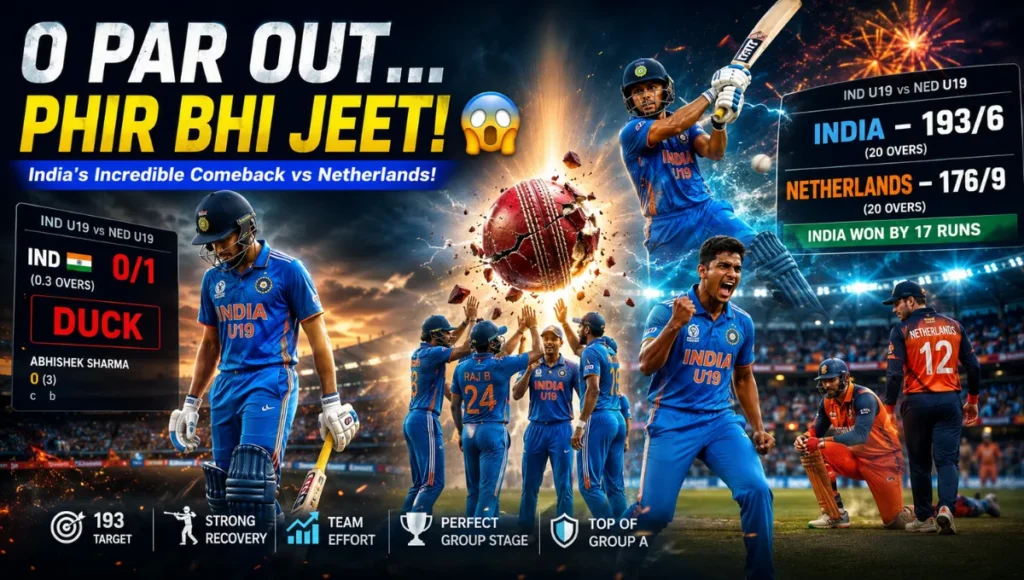

Abhishek Sharma walked back to the pavilion in the very first over. Third ball, no run added, third duck of the tournament for the opener. On paper, this looked like the day Netherlands finally cracked India’s top order open.
It wasn’t.
By the time the match ended, India had won by 17 runs, extended their perfect group-stage record, and locked their spot at the top of Group A. Here’s the real problem most match reports skip: how does a team lose an opener for zero and still post 193?
The Context Before The Toss
India walked in already qualified for the Super Eight stage, riding high after a commanding win over Pakistan just days earlier. Suryakumar Yadav won the toss and chose to bat first.
Netherlands, led by Scott Edwards, had recalled experienced campaigners Roelof van der Merwe and Bas de Leede specifically to add stability against top-tier attacks.
What most people miss: this wasn’t a must-win game for India. That zero pressure actually made the performance more revealing, not less teams often play looser when nothing’s riding on the result.
Head-To-Head Record: India vs Netherlands
Most fans assume this rivalry is lopsided just because India is the bigger cricketing nation. That’s only half true. The sharper reason is every single meeting has come in a World Cup, never a relaxed bilateral series where Netherlands could build experience gradually.
| Format | Matches Played | India Wins | Netherlands Wins | First Meeting |
|---|---|---|---|---|
| ODI | 3 | 3 | 0 | 2003 (Paarl) |
| T20I | 2 | 2 | 0 | 2022 T20 World Cup |
| Overall | 5 | 5 | 0 | — |
ODI Wins Breakdown
T20I Wins Breakdown
What people don’t realize: Netherlands has never faced India in a low-pressure environment to actually learn from mistakes. Every encounter has been sudden-death stakes.
The 2026 Clash: What Actually Happened
India batted first and finished at 193/6 in 20 overs. Netherlands replied with 176/7, falling short by 17 runs. That’s the headline. The real story is in the phases.
Phase-By-Phase Breakdown (India Batting)
Read Also:- Jharkhand Cricket Team vs Tamil Nadu Cricket Team Match Scorecard
The Powerplay Problem Nobody Talks About
India lost Abhishek Sharma inside over one, yet finished the Powerplay at 51/2, with Tilak Varma unbeaten on 26. Most people assume an early wicket automatically slows things down. It didn’t.
The Middle-Overs Squeeze
Between overs 7 and 15, India’s innings went quiet. Boundary-free stretches ran 20, 19, and even 16 balls at a time. If the match had ended at over 15, this was Netherlands’ game to win.
The Real Turning Point
Shivam Dube walked in during that exact quiet patch and took 10 balls to score just 5 runs. Most viewers assumed a below-par total was coming. But here’s what most people miss once Dube found rhythm, he finished with 66 off 31 balls at a strike rate of 212.90.
The actual turning point wasn’t a single six. It was the 76-run stand between Dube and Pandya off just 35 balls nearly 40% of India’s total in under six overs.
How Netherlands’ Chase Fell Apart
Netherlands’ chase fell apart in the exact same phase where India had struggled earlier the death overs. That’s not a coincidence; it’s a pattern.
Why Netherlands Keeps Losing To India
What Fans Assume vs Reality
Most casual fans think Netherlands loses because their players lack “star power” next to India’s IPL-hardened lineup. The data doesn’t fully support that. Logan van Beek picked up 3 wickets for 56 runs proof individual bowling quality wasn’t the actual problem.
The sharper explanation: Netherlands’ batters get exposed against wrist spin during pressure-filled middle overs. Varun Chakravarthy’s 3/14 wasn’t a fluke it’s been the common thread across recent wins in this fixture.
The Bold Take
Netherlands doesn’t need better individual batsmen. They need a different tactical approach against spin built around sweeping and using crease depth, not standard defensive strokeplay. Until that shift happens, results won’t change even if talent on paper improves.
Key Players Who Decided The Match
What This Means Going Forward
India’s win completed a perfect group stage and confirmed their place in Group 1 of the Super Eights alongside South Africa, West Indies, and Zimbabwe.
India’s Super Eight Schedule
| Opponent | Date | Venue |
|---|---|---|
| South Africa | February 22 | Ahmedabad |
| Zimbabwe | February 26 | Chennai |
| West Indies | March 1 | Kolkata |
Read Also:- Uttar Pradesh Cricket Team vs Saurashtra Cricket Team Match Scorecard
The Action Item For Fans
Track India’s death-over dependency on Dube and Pandya. India’s very next Super Eight match saw South Africa hand them a heavy defeat a reminder that relying on one or two finishers doesn’t hold up against every opponent.
For Netherlands, the takeaway is different: their bowling attack is genuinely competitive even against top-tier lineups. The batting unit, not the bowling, remains the fixable weak link.